Stop three · the shelf
Building a Shelf That Breathes
A shelf is a small stage. Fill every inch and nothing stands out; leave room around each piece and a pothos and three paperbacks can look like a gallery.
Start by emptying it
Take everything off. Wipe the shelf, then sort what you have into three loose groups: plants, books, and objects such as vases, candles, small artworks and found things. You will almost certainly put back fewer pieces than you removed, and that is the point. Stylists often say that a third of a shelf should be empty space. It sounds wasteful until you see how much calmer the wall becomes.
Check the light before anything goes back. Shelves beside a window can host light-hungry plants on the side nearest the glass; deep alcoves and the far end of a long bookcase suit tolerant species such as ZZ, pothos and philodendron.
Think in triangles
Place your tallest piece first, slightly off-centre. Then add a mid-height item and a low one so the three tops form a loose triangle. Repeat the triangle on the next shelf, but flip it, so the tall piece sits on the opposite side. Across a whole bookcase this zig-zag keeps the eye moving instead of resting on a flat line.
Plants make excellent triangle anchors. An upright snake plant gives height, a rounded peperomia fills the middle, and a low bowl of succulents finishes the group. Our Rule of Three Pots is simply this idea applied to greenery.
“Empty space is not something you forgot to fill. It is the air the arrangement breathes.”
Let something trail
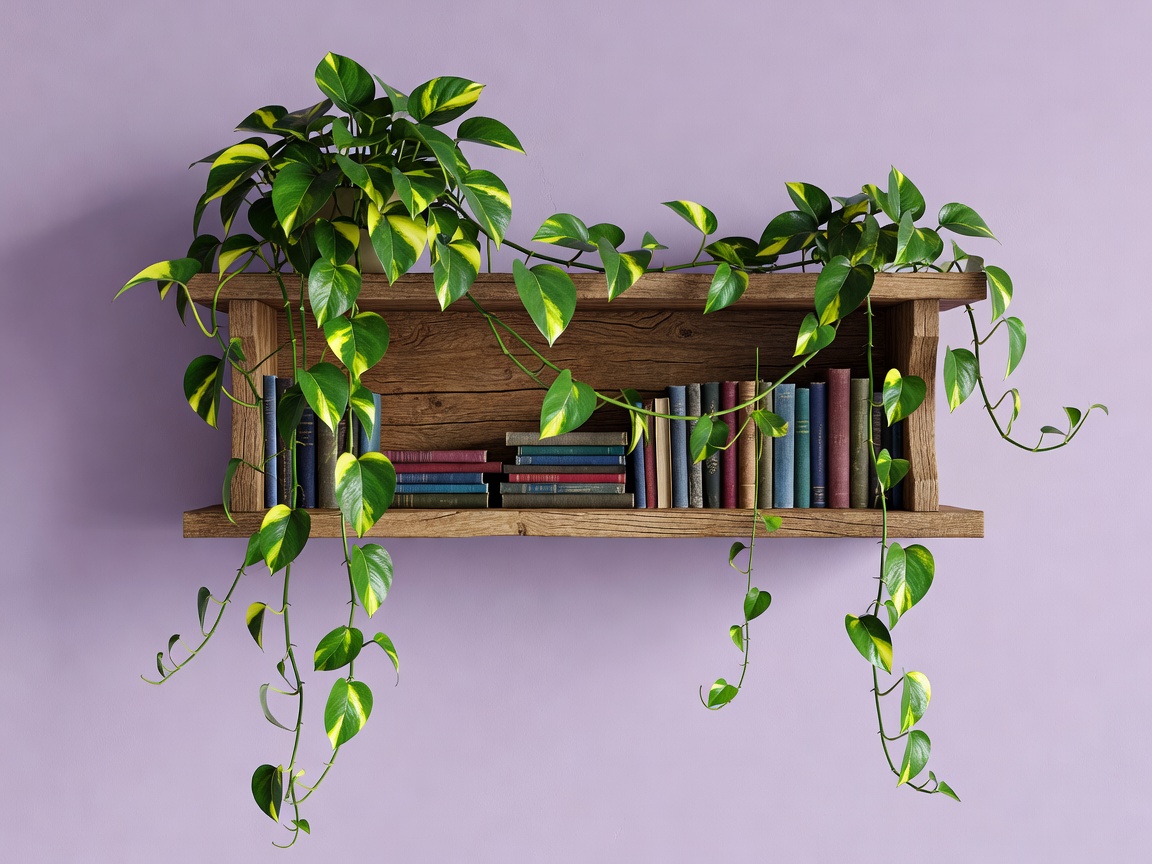
Trailing plants are the shelf stylist's secret. They break the rigid horizontal lines of timber and connect one shelf to the next. Good choices include golden pothos, heartleaf philodendron, Hoya carnosa, string of pearls (for a bright shelf only) and tradescantia. Put them on the top shelf or at the end of a row so the vines can fall freely; let them hang past a book or two but not curtain the whole unit.
Trim long strands every couple of months. Pinching just above a leaf node encourages fuller growth near the pot, and the cuttings root happily in a glass of water, ready for another room.
Mix the materials
- Books: stack some horizontally to create small plinths for plants, and stand others upright with a bookend vase.
- Texture: balance smooth glazed pots with a rough terracotta piece and one woven element.
- Colour: repeat one accent colour three times across the unit, perhaps aubergine glaze, a book spine and a print.
- Height: lean a small framed print at the back of a shelf to add depth behind a low plant.
Weight, safety and water
Soil is heavy when wet. Put the largest and heaviest pots on the lowest shelves and keep floating shelves for small plants unless you know the fixings are rated for the load. Freestanding bookcases should be anchored to the wall, particularly in homes with children or climbing cats. Renters can usually use a single small fixing with landlord permission; ask before drilling.
Plan watering before you style. Every plant on a shelf should be in a nursery pot inside a cachepot, or sit on a discreet saucer, so drips never reach books or timber. For high shelves, a long-spout watering can or a step stool kept nearby makes the weekly round realistic. If watering a spot feels like a chore, that plant will be neglected; move it somewhere easier.
Edit, then edit again
Step back to the doorway and squint. Anything that disappears into a blur can go; anything that jumps out too loudly might need a quieter neighbour. Revisit the shelf with the seasons: plants grow, lean towards the light and change the balance. A shelf that breathes is never quite finished, which is part of the pleasure.